Persistent piles means symptoms continue after you improve fibre and fluid intake, soften stools, avoid straining, or try topical treatment. The right operation depends on whether the problem is internal prolapse, external disease, mixed haemorrhoids, or another condition that resembles piles; this guide shows what to check before choosing treatment in Mahalaxmi.
Key takeaways
- Confirm the bleeding source before treating it as haemorrhoids.
- Grade III and IV piles often need a procedure rather than creams alone.
- MIPH reduces prolapsing tissue; hemorrhoidectomy removes external and prolapsing tissue.
- Ask about recurrence, pain, recovery time and the operation’s exact target.
What persistent piles means—and when the diagnosis needs checking
Persistent piles means symptoms continue after fibre, adequate fluids, stool-softening measures or a short course of topical treatment. Bright-red bleeding, pain, itching or a lump can occur with haemorrhoids, but none proves that diagnosis.
A lump that appears during straining may be prolapsing internal haemorrhoid; a painful lump at the opening may instead be thrombosis, an abscess or another condition.
A clinician checks the cause with inspection, a digital rectal examination and anoscopy, which allows the lower anal canal and rectum to be viewed directly. The assessment must also consider:
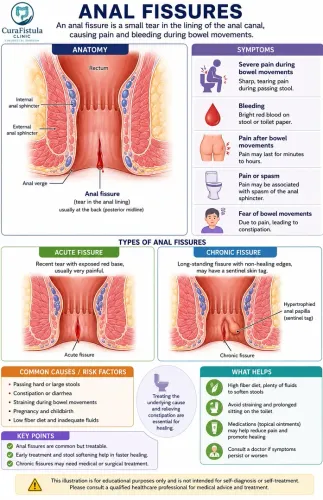
- Anal fissure, especially when bowel movements cause sharp, tearing pain
- Fistula or abscess, suggested by pus, a draining opening, swelling or fever
- Rectal prolapse, where a larger section of rectal tissue protrudes
- Inflammatory bowel disease, particularly with diarrhoea, mucus or abdominal pain
- Polyps or colorectal cancer, which can cause bleeding without a visible haemorrhoid
Ask for further bowel evaluation when bleeding is unexplained, bowel habits have changed, you have weight loss or anaemia, or a close relative has had colorectal cancer. Do not select MIPH or haemorrhoidectomy from a search phrase such as hemorrhoids treatment mahalaxmi; choose only after the haemorrhoid pattern is documented and alternatives are excluded.
Persistent or worsening symptoms deserve reassessment rather than repeated self-treatment.
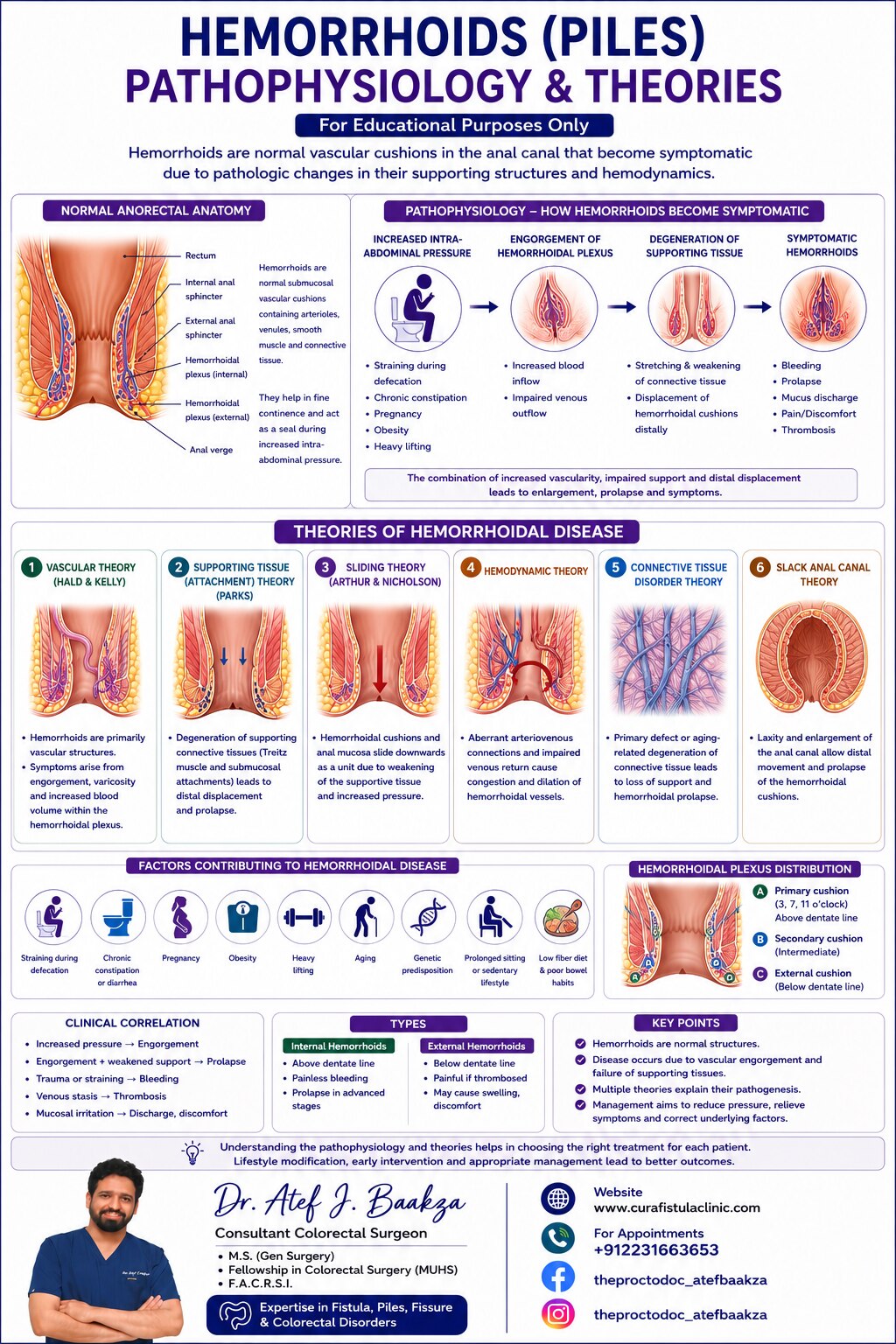
The four haemorrhoid grades and what they mean for treatment
Failed home treatment does not automatically mean you need surgery. The deciding factors are the internal haemorrhoid grade, how much it prolapses, whether an external component exists, and whether fibre, fluids, stool-softening measures and shorter toilet time have failed.
1. Grade I bleeds but does not prolapse. Continue bowel-habit measures, and persistent bleeding can often be treated with an office procedure such as rubber-band ligation rather than an operation.
2. Grade II protrudes during straining but returns by itself. Rubber-band ligation remains a common next step when home treatment fails; surgery is considered if symptoms recur, bleeding continues or office treatment is unsuitable.
3. Grade III protrudes and requires a finger to push it back. Some cases respond to banding, but repeated prolapse, significant bleeding or failed office treatment makes surgery more likely. MIPH may suit selected internal prolapse without major external disease.
4. Grade IV stays outside and cannot be replaced. Large, chronically prolapsed or mixed internal-and-external haemorrhoids usually need excisional haemorrhoidectomy because a stapled procedure may leave the external lump behind.
A surgeon confirms the grade with inspection, digital rectal examination and anoscopy, then checks for fissure, fistula, abscess or another cause of symptoms. The phrase piles surgery Mahalaxmi identifies a local search, not a treatment choice: ask which procedure fits your documented findings, expected pain, time away from work and recurrence risk.
Even after piles surgery in Mahalaxmi, hard stools and straining can cause new symptoms.
MIPH and hemorrhoidectomy: what each operation changes
MIPH uses a circular stapler to remove a ring of prolapsing rectal lining above the dentate line, then lifts the remaining haemorrhoidal tissue. It does not remove every haemorrhoid or an external lump. Hemorrhoidectomy cuts out the enlarged internal and external haemorrhoidal tissue, making it the more definitive operation for bulky or mixed disease.
| Option | Prolapse and external tissue | Pain and recovery | Bleeding control and recurrence |
|---|---|---|---|
| MIPH | Lifts suitable prolapsing internal haemorrhoids; leaves external lumps, skin tags or external haemorrhoids behind | Usually less early pain and faster activity recovery | Controls bleeding from treated internal tissue, but recurrent prolapse or symptoms are more likely |
| Hemorrhoidectomy | Removes large grade III–IV prolapse and mixed internal/external haemorrhoids directly | More postoperative pain and a slower early recovery | More complete control for the removed tissue, with lower long-term recurrence than MIPH |
Both operations can cause bleeding, urinary retention, infection and temporary difficulty controlling gas or stool. Hemorrhoidectomy also carries uncommon late risks such as anal stenosis or persistent pain, while MIPH can require another procedure if prolapse returns.
A large external component, symptomatic skin tag or thrombosed external haemorrhoid makes MIPH a poor match. Therefore, “MIPH for piles Mahalaxmi” describes a location-based search, not a universal solution; “hemorrhoidectomy Mahalaxmi” does not identify a different technique.
Compare the documented haemorrhoid pattern, expected time away from work, pain plan and recurrence risk with the surgeon performing the operation.
When MIPH fits—and when excision is the more complete option
MIPH suits you when inspection, digital rectal examination and anoscopy show prolapsing internal haemorrhoids without a dominant external problem. The surgeon should document the grade, direction and reducibility of prolapse, then check for a fissure, fistula, abscess, thrombosis, symptomatic skin tag and previous anorectal surgery.
A stapled operation lifts internal tissue; it does not reliably remove an external lump.
| Finding | MIPH | Excisional hemorrhoidectomy |
|---|---|---|
| Internal grade III prolapse | Suitable when external disease is minor | More tissue removal than needed in selected cases |
| Large external or mixed disease | Poor fit; the lump or skin excess can remain | More complete because the abnormal complexes are removed |
| Recurrent or grade IV prolapse | Discuss higher recurrence and possible reoperation | Usually the more definitive option, with more early pain |
Choose hemorrhoidectomy when a large external component, thrombosed external haemorrhoid, symptomatic skin tag, substantial mixed haemorrhoids or recurrent prolapse drives your symptoms. Its recovery is slower, but direct excision addresses both the internal and external disease.
MIPH usually offers less early pain and a faster return to activity, with a greater long-term risk of recurrent symptoms.
Search terms such as piles surgery benefits mahalaxmi, miph for piles mahalaxmi and hemorrhoidectomy mahalaxmi describe location, not separate procedures. In a consultation with Dr. Atef J. Baakza, ask which examination finding makes the recommended operation more complete, how much time you may need away from work, and what recurrence risk applies to your pattern.
Related service
Hemorrhoids - MIPH, Hemorrhoidectomy Hemorrhoids - MIPH, Hemorrhoidectomy Hemorrhoids – MIPH & Hemorrhoidectomy by Dr. Atef J. Baakza Understanding Hemorrhoids Hemorrhoids, commonly known as piles, are swollen veins in the... View service → |
What to confirm before surgery and how to judge recovery
Before scheduling piles surgery mahalaxmi, confirm the diagnosis rather than treating every bleed as haemorrhoids. Ask for inspection, a digital rectal examination and anoscopy.
Persistent bleeding, altered bowel habits, weight loss, anaemia, a family history of colorectal cancer or no previous diagnosis may require colon evaluation, usually colonoscopy, to check for polyps, inflammatory bowel disease or cancer.
Discuss these points before consenting:
- Which operation fits the internal and external findings, and what happens if MIPH does not address an external lump or skin tag?
- How much pain, bleeding, wound care and time away from work should you expect, and when will bowel movements and exercise become comfortable?
- Which medicines need a plan? Never stop aspirin, clopidogrel, warfarin or a direct oral anticoagulant yourself; your surgeon and prescribing doctor must coordinate timing.
- What are the piles surgery benefits mahalaxmi consultation documents, including alternatives, recurrence risk and the expected result?
Recovery is judged by steady improvement, not instant comfort. Keep stools soft with prescribed laxatives, fibre, fluids and gentle toilet habits; avoid straining and prolonged sitting. These steps support hemorrhoids treatment mahalaxmi outcomes and reduce new symptoms after surgery.
Contact the surgical team for heavy or persistent bleeding, fever, worsening pain or swelling, pus, inability to urinate, repeated vomiting, dizziness or failure to pass stool and gas. A follow-up examination confirms healing and addresses problems early.
Frequently asked questions
What does persistent piles mean?
Persistent piles means symptoms continue after fibre, adequate fluids, stool-softening measures or a short course of topical treatment. Bleeding, pain, itching or a lump also require diagnostic checking because they do not prove haemorrhoids.
How do the four haemorrhoid grades affect treatment?
Grade I haemorrhoids remain inside the anal canal, Grade II prolapse during straining but return on their own, Grade III require manual replacement, and Grade IV remain prolapsed. Treatment depends on grade, symptoms, tissue involved and examination findings.
What is the difference between MIPH and hemorrhoidectomy?
MIPH, or stapled haemorrhoidopexy, lifts prolapsing internal haemorrhoidal tissue and reduces its blood supply. Hemorrhoidectomy excises haemorrhoidal tissue, making it a more complete option when external components or substantial prolapse need removal.
When is hemorrhoidectomy more suitable than MIPH?
Excision may suit large external piles, mixed internal and external disease, fixed Grade IV prolapse or recurrent prolapse that MIPH would not fully address. Your surgeon must confirm the findings during examination.
What should you confirm before piles surgery in Mahalaxmi?
Confirm the diagnosis, haemorrhoid grade, exact procedure, tissue being treated, anaesthesia plan, expected pain, wound care, time away from work, recurrence risk and warning signs requiring review.
Keywords