A previous third- or fourth-degree childbirth tear does not automatically mean you need sphincteroplasty. The right choice depends on your symptoms, the condition and location of the muscle defect, bowel consistency, previous treatment, future pregnancy plans, and what testing shows. By the end, you will know which questions determine candidacy and how repair compares with nonoperative and other surgical options.
Key takeaways
- Symptoms and bowel-control loss matter more than an ultrasound image alone.
- Third- and fourth-degree tears require specialist assessment when leakage persists.
- Ask about endoanal ultrasound, manometry, recovery, and alternatives before surgery.
- Compare sphincteroplasty with conservative treatment, sacral nerve stimulation, and diversion when appropriate.
Which women are suitable for sphincteroplasty after childbirth?
A woman is suitable for sphincteroplasty after perineal tear when a third- or fourth-degree injury is linked to meaningful loss of bowel control. Leakage of gas, staining, urgency, inability to defer a bowel movement, liquid-stool leakage, or solid-stool accidents matter more than an ultrasound image alone.
A clinically important external anal sphincter defect supports repair; an incidental scar in a woman with normal control does not.
| Situation | What it means | When repair is considered |
|---|---|---|
| Recent undiagnosed tear | The injury was missed or symptoms appeared after delivery | Assess promptly; an identified injury is usually reviewed at 6–12 weeks |
| Old obstetric injury | Scarred or separated muscle has caused persistent symptoms | Delayed presentation does not automatically rule out repair |
| Ultrasound scar without symptoms | Imaging shows a defect but bowel control remains normal | Surgery is usually not justified by the scan alone |
Long-standing symptoms need a wider assessment because scarred tissue, altered rectal sensation, diarrhoea, pudendal nerve dysfunction, rectocele, or internal sphincter damage can contribute. Repairing the visible external-muscle gap may not correct those problems.
Before deciding, record how often leakage occurs, whether stool is formed or loose, how quickly urgency arrives, and what triggers accidents, such as walking, exercise, coughing, or reaching a toilet. Describe the effect on work, travel, sleep, sex, and confidence.
These details show whether the defect is clinically important and whether sphincteroplasty is more suitable than another treatment.
How is an obstetric anal sphincter injury confirmed?
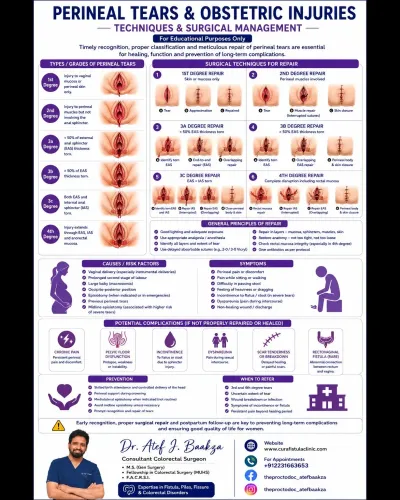
Confirmation requires more than finding an old third- or fourth-degree tear. The clinician matches bowel-control symptoms with examination findings, delivery records and, when needed, imaging or pressure testing.
1. Take a symptom history: leakage of gas, staining, urgency, inability to defer a bowel movement, liquid-stool leakage and solid-stool accidents. Record frequency, stool consistency, activity triggers and when symptoms began.
2. Inspect the perineum and anus for a scar, wound breakdown, altered anatomy or visible muscle separation.
3. Perform a digital rectal examination to assess resting tone, squeeze strength, tenderness, scarring and any palpable gap.
4. Review the delivery record and any repair notes. These can show whether the original tear involved the external anal sphincter, internal sphincter or rectal lining.
5. Use endoanal ultrasound to identify the position and extent of an external or internal sphincter gap. Anal manometry measures resting and squeeze pressures when pressure readings will clarify weakness or poor coordination.
Neither test automatically means surgery. A visible defect without important symptoms may not justify repair, while symptoms can require assessment even when scans are inconclusive.
After an identified obstetric anal sphincter injury, follow-up usually occurs at six to twelve weeks. Urgency or leakage that appears months or years later still deserves specialist assessment because scar tissue, altered sensation, loose stools or a previous repair can change function.
Before choosing sphincteroplasty in Mahalaxmi, women should ask: Does the defect involve the external sphincter? Is the tissue suitable for mobilisation? Are urgency or loose stools contributing to leakage? Location matters less than matching these findings to a realistic treatment plan.
What happens before and during sphincteroplasty?
For mild leakage, or when loose stool and urgency drive symptoms, conservative treatment should come first. Stool-bulking fibre or medication, antidiarrhoeal treatment when appropriate, dietary adjustment, bowel-training strategies, pelvic-floor physiotherapy and biofeedback can improve control without an operation. Surgery cannot correct diarrhoea, poor rectal sensation or nerve dysfunction.
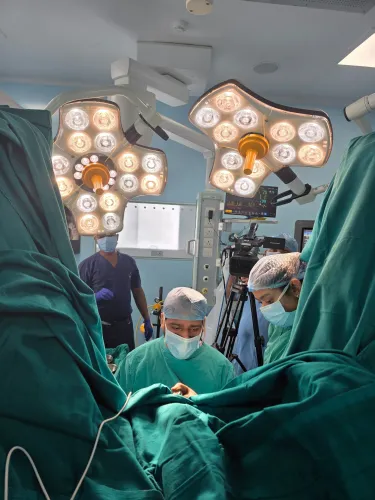
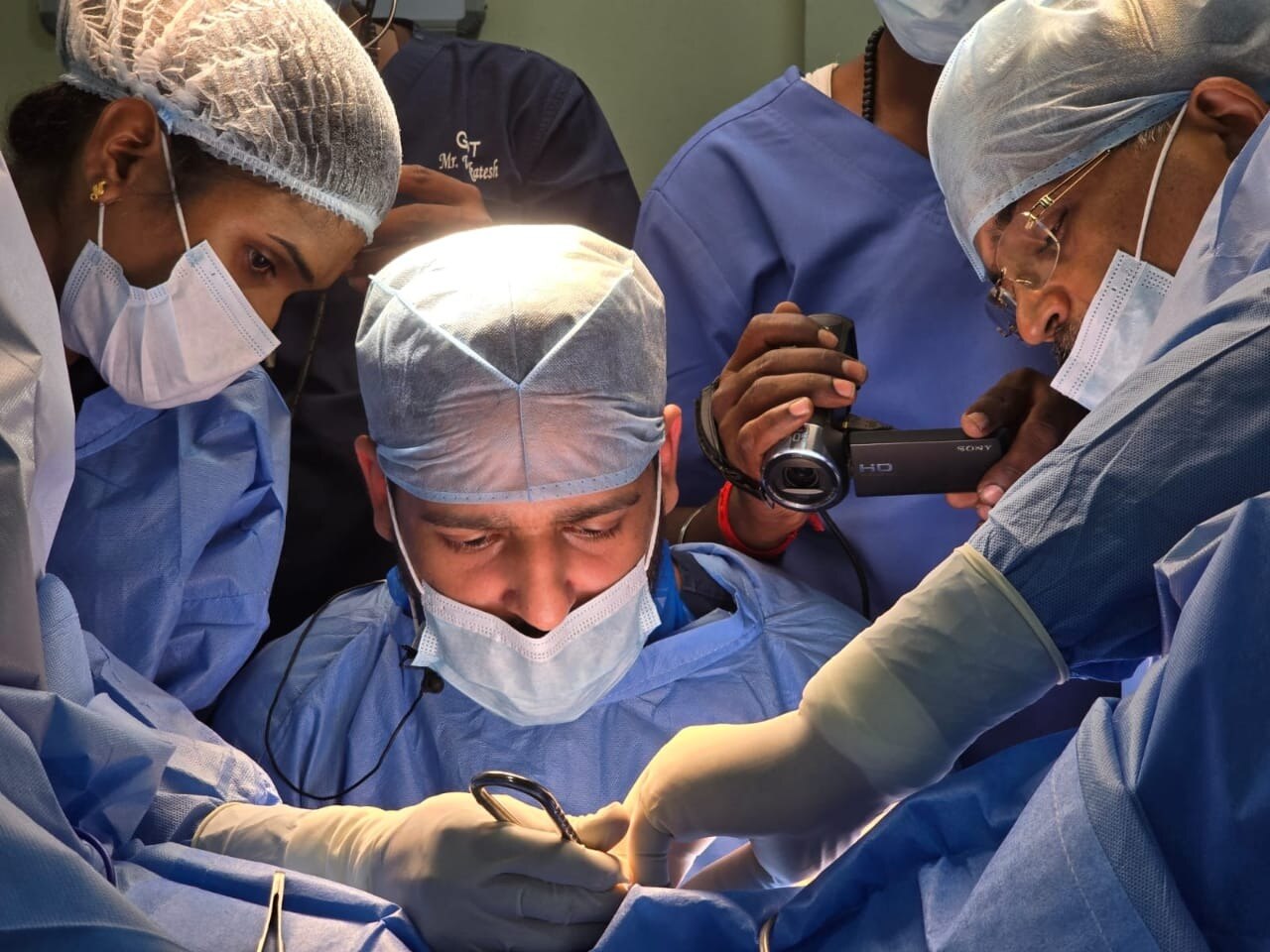
During sphincteroplasty, the surgeon repairs the separated external anal sphincter through a perineal incision:
- The separated muscle ends are identified and scar tissue is freed.
- Each end is mobilised far enough to meet without tension.
- The ends are overlapped and sutured, or brought together directly in an end-to-end repair.
- The perineal wound is closed.
An overlapping repair places one muscle end over the other, creating a broader contact zone. Direct end-to-end repair reapproximates the cut ends without overlap; the choice depends on tissue quality, scarring and the gap.
This is different from routine perineal tear repair performed immediately after childbirth, and from broader pelvic-floor reconstruction, which may address a rectocele or other supporting tissues.
A visible muscle gap does not prove that closing it will resolve every cause of incontinence. Discuss these sphincter repair options alongside bowel treatment and rehabilitation, and set the goal as durable improvement in urgency, staining, gas or stool control—not guaranteed normal function. Pain, infection, wound breakdown, constipation and recurrent leakage remain possible.
How does sphincteroplasty compare with other repair options?
Sphincteroplasty is not the strongest choice for every woman seeking anal incontinence surgery mahalaxmi. It is most useful when symptoms match a repairable external sphincter defect; another option may better address loose stool, urgency, nerve dysfunction, failed repair, or severe disease.
| Option | What it means | When it applies |
|---|---|---|
| Continued nonoperative care | Fibre or antidiarrhoeal medication, dietary adjustment, bowel training, pelvic-floor therapy and biofeedback | Mild leakage, loose stools, urgency, or symptoms with several contributing causes |
| Sacral neuromodulation | An implanted device modifies the nerves controlling bowel continence | Persistent symptoms after conservative care; an external sphincter defect does not automatically exclude it |
| Injectable bulking agents | Material is injected into the anal canal wall | Not a routine first-line substitute because benefit is limited or inconsistent |
| Graciloplasty | A thigh muscle is repositioned to create a new anal sphincter | Selected complex cases or failed repairs |
| Antegrade continence enema | Regular bowel emptying through a surgically created access route | Selected severe cases when other treatments are unsuitable |
| Stoma | Stool is diverted into a bag through the abdominal wall | Severe, refractory incontinence, not a routine next step |
Sphincteroplasty itself can cause pain, constipation, wound infection or breakdown, persistent or recurrent leakage, urgency, later deterioration, and further treatment. Future pregnancy belongs in the decision: discuss another vaginal birth and delivery planning individually; caesarean delivery is not automatic.
Searching for anal incontinence surgery mahalaxmi should lead to comparison of expected improvements in gas control, staining, urgency, liquid stool, and solid stool—not location alone.
What should you ask before choosing care in Mahalaxmi?
A nearby clinic is not automatically the right choice for sphincteroplasty. Before accepting a repair, ask whether the original tear involved the anal sphincter and whether endoanal ultrasound shows a defect that can be mobilised and repaired.
Use this checklist during a consultation:
- Which symptoms should improve: urgency, staining, gas control, liquid-stool leakage, or solid-stool accidents?
- What examination and ultrasound findings support repair? Would anal manometry change the plan?
- Which nonoperative treatments have I tried, including fibre, bowel-regulating medicine, pelvic-floor physiotherapy, and biofeedback?
- How do a previous repair, scarred or poor-quality tissue, and the defect’s size affect the expected result?
- How will loose stool, diarrhoea, constipation, or reduced rectal sensation be treated?
- How would a future pregnancy and planned vaginal birth affect timing or repair choice?
Compare the proposed path with realistic alternatives:
| Option | What it addresses | Main trade-off |
|---|---|---|
| Sphincteroplasty | A repairable external sphincter defect with matching symptoms | Wound problems, pain, recurrent leakage, or later deterioration |
| Pelvic-floor treatment | Weak coordination, urgency, or symptoms worsened by stool consistency | Requires regular training and may not close a muscle gap |
| Sacral neuromodulation | Persistent incontinence, including some women with a sphincter defect | Requires implanted treatment and follow-up |
Ask for separate expectations for gas, staining, urgency, liquid stool, and solid stool. No clinician can promise complete continence. Dr. Atef J. Baakza can assess these findings in a colorectal and proctology consultation in Mumbai and discuss repair, pelvic-floor treatment, neuromodulation, or another option.
Choose sphincteroplasty Mahalaxmi only when symptoms, examination, imaging, tissue condition, and future goals align.
Frequently asked questions
Which women are suitable for sphincteroplasty after childbirth?
Women with a confirmed third- or fourth-degree obstetric anal sphincter injury and meaningful bowel-control problems may be candidates. Symptoms include gas leakage, staining, urgency, liquid-stool leakage, or solid-stool accidents.
How is an obstetric anal sphincter injury confirmed?
A specialist reviews the delivery and tear history, examines the anus and perineum, and may use endoanal ultrasound to identify a muscle defect. Anal manometry measures sphincter pressure and supports treatment planning.
What happens before and during sphincteroplasty?
Before surgery, discuss symptoms, bowel habits, medications, smoking, previous repairs, tests, risks, and recovery. During sphincteroplasty, the surgeon identifies the separated muscle ends and repairs them, often with an overlapping technique.
How does sphincteroplasty compare with other repair options?
Treatment can include bowel-regimen changes, pelvic-floor physiotherapy, biofeedback, injectable therapies, sacral nerve stimulation, or sphincter repair. The best option depends on symptoms, muscle damage, test results, and previous treatment.
What should you ask before choosing sphincteroplasty care in Mahalaxmi?
Ask who will perform the operation, which tests are needed, the proposed repair technique, expected hospital stay, wound-care instructions, continence goals, recurrence risk, alternatives, and follow-up plan.
Keywords